
Your Cart
Holiday Food Packaging: When to Place Your Order So It Arrives Before Peak Season
Holiday food packaging has a deadline that no other packaging order has: the retail shelf date. Miss it on a year-round product and you lose a month of sales; miss it on a seasonal gift pack and you lose the entire year's opportunity, because there is no restock window after the season ends.
Every autumn we watch the same pattern repeat. Brands that opened packaging conversations in September move through sampling and production with room to spare. Brands that start in late October end up paying for air freight, simplifying their designs, or shipping after the peak — not because anything went wrong, but because the runway was simply too short. This article lays out the full holiday food packaging timeline so you can see exactly when the order has to happen.
Why Holiday Packaging Orders Go Wrong
Seasonal food packaging fails for structural reasons, not bad luck:
There is no second chance. A Christmas gift tray that arrives on December 26 is inventory for next year, at best. Everything — sampling, approval, production, freight — has to land before a fixed date you cannot move.
Everyone orders at the same time. Your supplier's production slots, and the ocean freight space out of Asia, are both contested by every other brand running the same countdown. Lead times that are normal in March stretch in October.
Gift packs have more parts. A holiday dessert pack usually means an insert plus an outer box plus labels or sleeves. The packaging is only as ready as its slowest component — and the insert, being custom-formed, is almost always that component.
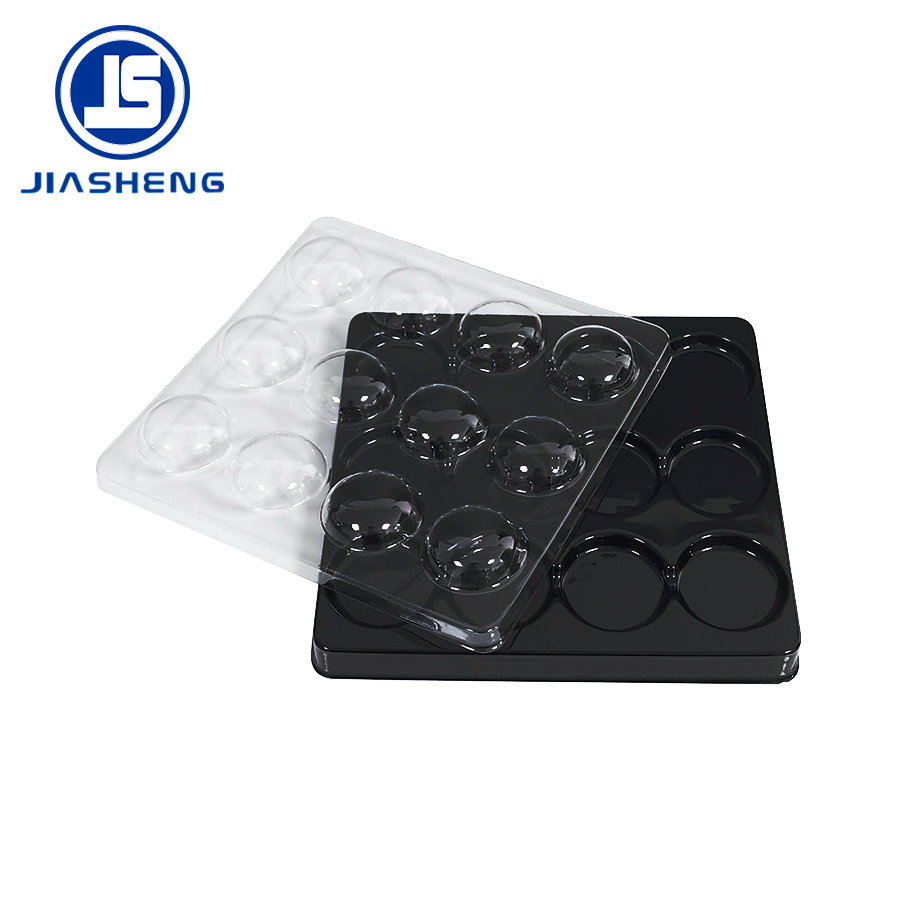
Formats like the food-grade chocolate tray inserts with molded cavities above look simple, but each cavity position is a tooling decision made weeks before the first production part exists. That is the work the timeline below is really about.
The Real Timeline, Stage by Stage
Based on what we see across export orders every season, here is where the days actually go:
Sampling: 5–7 days for modified stock formats, 2–4 weeks if a new mold is needed. Adjusting an existing insert — cavity count, depth, layout — is fast. A fully custom shape requires mold cutting and trial shots. This is the single biggest fork in the timeline, and it is decided by how early you start. Working from existing formats through free sample services keeps this stage to days rather than weeks.
The approval loop: 3–7 days per round. The sample ships, your team reviews, feedback comes back, a revised sample ships again. Each additional round resets this clock entirely — which is why the number of iterations, not the speed of any single one, determines your sampling duration.
Production: 15–25 days for thermoformed inserts at typical order volumes, assuming the slot is booked. In peak season the queue itself is the constraint — capacity is allocated to confirmed orders first.
Ocean freight: 12–22 days to major EU and US ports, plus 1–2 weeks more for consolidated (LCL) shipments. Add port handling, customs clearance, and inland delivery on both ends.
Receiving and kitting. Gift packs still have to be assembled: insert into box, product into insert, sealed, labeled, cartoned. Buyers routinely forget to reserve time for this last stretch. Two-piece formats such as dome-lid cake carriers arrive ready to fill — one reason they stay popular for holiday gifting — while multi-part gift packs need that kitting time budgeted.
Work Backwards From Your Shelf Date
The practical way to plan is to start at the shelf and count backwards. For a product that must be on shelves by mid-December, the calendar looks like this:
| Milestone | Target date |
|---|---|
| On the retail shelf | Dec 10 |
| Received, QC'd and kitted at your warehouse | Nov 25 |
| Vessel departure (ocean freight + clearance buffer) | Nov 1 |
| Production complete | Oct 28 |
| Production starts (15–25 days) | Oct 3–13 |
| Final sample approved | Early October |
| First sample in hand — specification locked | Late September |
Read honestly, the table says something uncomfortable: by mid-October, production should already be running. If your PO has not been placed yet, the question is no longer "when do we order" but "what do we compress" — and that is the next section.
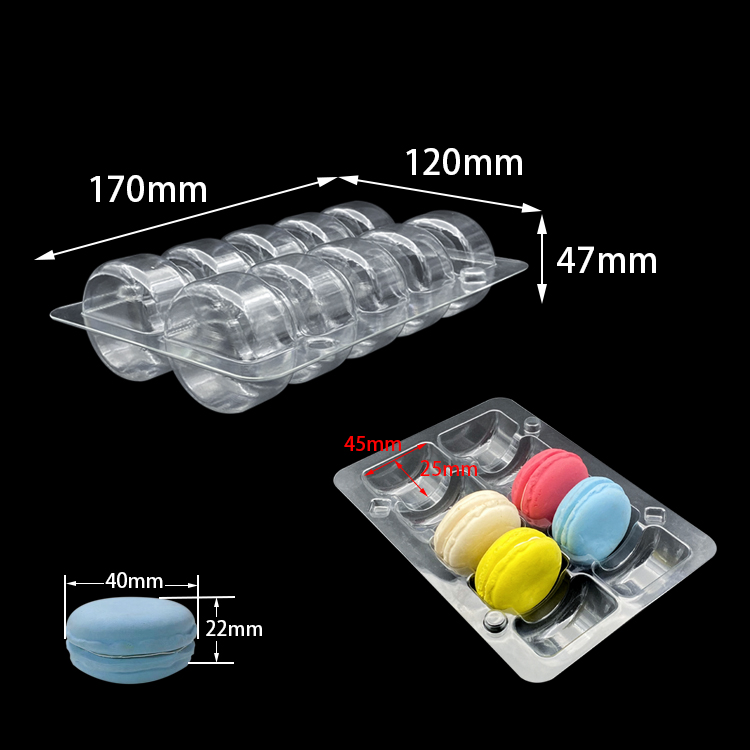
One more reason to lock the specification early: every dimension matters downstream. The macaron insert below, for example, is specified at 170 × 120 × 47 mm with 45 × 25 mm cavities sized to a standard 40 × 22 mm macaron. Those numbers come from the actual product — and every change to them restarts sampling, approval, and sometimes tooling.
Three Stages Buyers Underestimate
1. The number of sampling rounds, not the speed of one. First samples are cheap to obtain; the calendar cost is in the loops. We have seen a "quick tweak" cost two weeks because the revised sample reopened three other questions. Front-load decisions — cavity layout, colors, branding position — before the first sample is ever made. The way a professional team runs this stage is described in our walkthrough of how a packaging design brief turns into a first sample.
2. The approval chain. For seasonal gift packs the approvers usually include your brand team, sometimes the retail buyer, occasionally legal for claims on the pack. If those people first see the sample when it arrives, you have added their review time to the critical path. Involve them before sampling starts.
3. Peak-season freight space. Ocean capacity out of Asia tightens from October onward and rates climb with it. Book the shipping slot when you confirm the production order, not when production finishes — they are two separate bookings and the second one is the easy one.
Already Late? What Can Still Be Saved
If your timeline no longer closes with ocean freight, there are still three levers, in the order we would pull them:
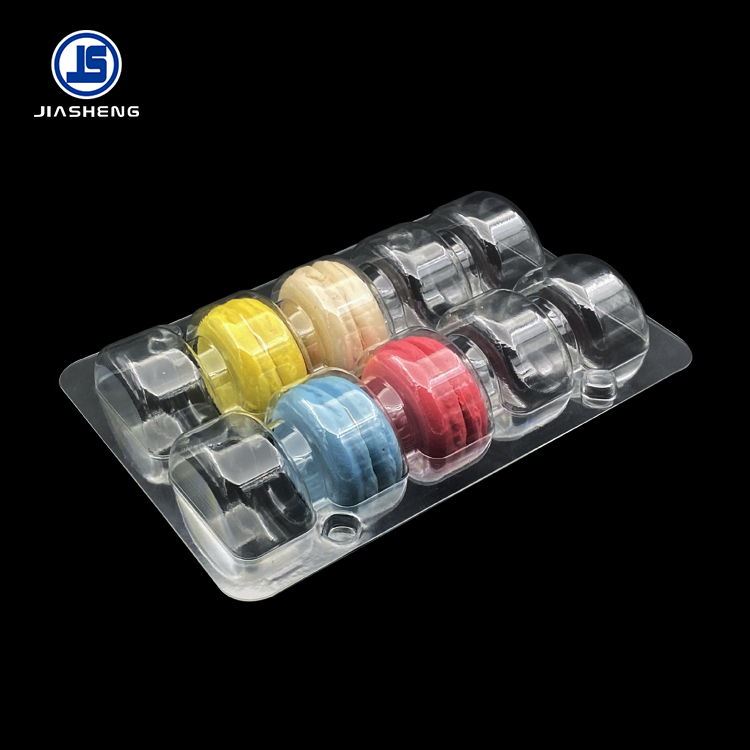
Switch to an existing mold. A stock or lightly modified insert skips tooling entirely — the difference between a 3-week and a 1-week start. Cavity layouts like the one below — a macaron box insert with individual cavities — already cover the formats most dessert brands need; matching your product to an available mold beats waiting for a custom one.
Split the shipment. Air-freight a first batch to cover the launch window and let the main volume follow by sea. Inserts nest tightly, so a surprisingly large quantity fits in an air shipment — ask your supplier for the nesting ratio before assuming air freight is unaffordable.
Simplify the design. Fewer components, a standard tray color with custom labeling instead of custom-colored material, one insert instead of three SKU-specific ones. A slightly plainer pack that arrives on time outsells a perfect one that arrives in January.
Four Questions to Ask Your Packaging Supplier This Month
1. Given our shelf date, what is the latest date you can receive our PO and artwork? A supplier who runs this countdown every year will answer with a date, not a reassurance.
2. Does our insert need a new mold, or can it run on an existing one? The answer changes the sampling stage from days to weeks.
3. How is peak-season capacity allocated, and can our slot be locked? You want confirmation that a placed order holds a production window.
4. Can the order be split into an air-freight first batch and a sea-freight main run? Splitting is the standard rescue move; ask for both quotes now so the decision is ready if you need it.
Frequently Asked Questions
How early should we order holiday food packaging? For custom inserts shipping by sea: open the conversation in September, approve samples by early October, and start production by mid-October. That leaves buffer for one sampling iteration and normal peak-season freight.
Can custom inserts be produced faster than 15–25 days? Modified formats running on existing tooling can be, especially at smaller volumes. Fully custom molds cannot be compressed much — the mold itself is the long pole.
Is air freight realistic for packaging? For inserts, often yes: thin-wall trays nest, so the volume is far smaller than the assembled pack suggests. Get the nested volume per 1,000 pieces from your supplier and price it — it is usually less intimidating than expected.
Our retail buyer approves designs late every year. How do we protect the timeline? Give the buyer a stated internal deadline tied to the shipping date, and share the backwards calendar with them. Buyers respond to dates better than to urgency.
Do molds survive for next season? Well-maintained tooling does, and next year's reorder skips sampling almost entirely — the strongest argument for committing to a custom insert is that the second season gets faster and cheaper.
The Bottom Line
Holiday food packaging is not harder than any other packaging — it is the same process with a deadline that will not move. Count backwards from your shelf date, get the specification locked early so sampling stays to one round, book production and freight as two linked decisions, and know your rescue options before you need them. The brands that treat October as the production window, not the planning window, are the ones whose gift packs are on the shelf when the season starts.
Planning Holiday Packaging for This Season?
Send us your shelf date and product dimensions — we will map the timeline and confirm what is achievable.
Start the Countdown