
Your Cart
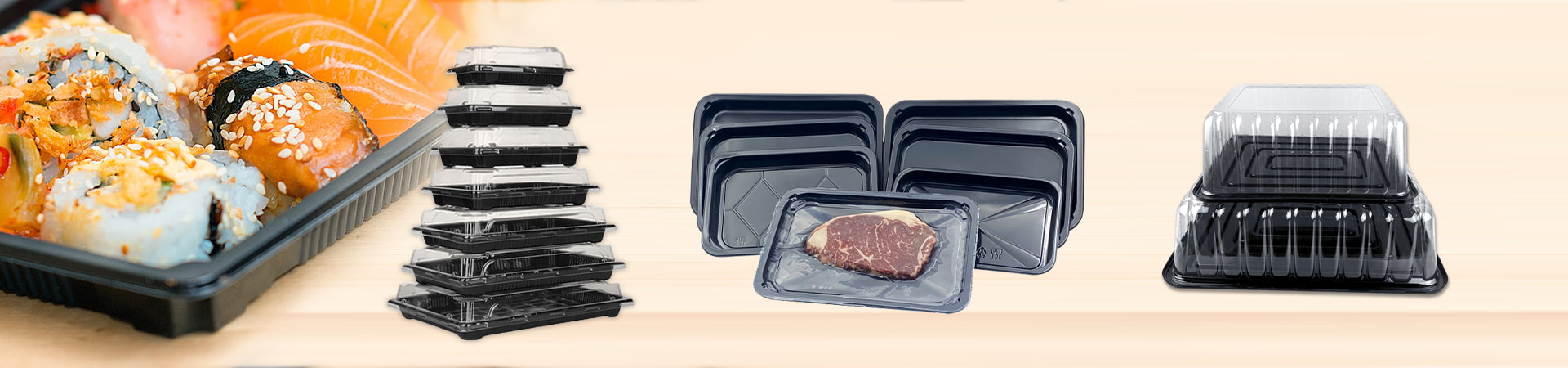
Designing Functional and Sustainable Disposable Food Tray Solutions
In today's global food service and distribution industries, the demand for disposable food tray solutions that perform flawlessly while addressing environmental concerns has never been higher. For manufacturers and B2B buyers, achieving this balance requires a deliberate design philosophy that prioritizes both immediate functionality and broader sustainability goals without compromising on core performance.
Core Functional Design Principles
The primary purpose of a disposable food tray is to perform reliably under real-world conditions. Key functional design considerations include:
-
Structural Integrity and Leak Resistance: Trays must maintain their shape and prevent leaks when holding liquids, sauces, or greasy foods. This involves strategic ribbing, reinforced corners, and well-engineered sealing surfaces for compatible lids.
-
Thermal Performance: For both hot and cold foods, material selection and design must ensure the tray insulates appropriately, withstands temperature extremes without warping, and is safe for microwave reheating or freezer storage when required.
-
User Experience and Logistics: Design impacts the entire chain. Features like easy-grip rims, secure stackability for storage and transport, and compartmentalization for meal components enhance handling for both kitchen staff and end-users.
Integrating Sustainability into the Design Process
Sustainability is now a fundamental design parameter, not an afterthought. This integration happens at multiple levels:
-
Material Selection and Sourcing: This involves evaluating options like post-consumer recycled (PCR) content, responsibly sourced biopolymers, or mono-material structures that are easier to recycle. The goal is to reduce reliance on virgin fossil-based plastics.
-
Source Reduction and Lightweighting: Advanced design and manufacturing techniques allow for creating trays that use the minimum material necessary to achieve the required strength and barrier properties. This reduces resource consumption and waste weight from the outset.
-
End-of-Life Considerations: Designers now consider the tray's entire lifecycle. Creating trays from recyclable materials (and clearly marking them) or designing for certified industrial composting where infrastructure exists are critical steps. Functionality should support, not hinder, proper disposal.
The Synergy of Function and Sustainability
The most effective designs find synergy between these two pillars. For instance:
-
A lightweight, yet rigid, design reduces material use (sustainable) and lowers shipping costs (functional).
-
A leak-proof tray made from a recyclable mono-material prevents food waste (sustainable) and ensures customer satisfaction (functional).
-
Optimal compartment sizing reduces excess packaging volume (sustainable) and improves portion control and presentation (functional).
Conclusion
Designing modern disposable food tray solutions is a complex exercise in balancing competing priorities. Success lies in a holistic approach where every design decision—from initial material choice to the shape of the rim—is evaluated for its impact on both performance and environmental footprint. For B2B clients, partnering with a manufacturer that employs this integrated design philosophy is key to securing packaging that meets operational demands, satisfies end-user expectations, and aligns with increasingly important corporate sustainability objectives in the food service supply chain.